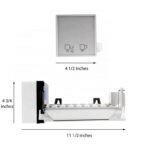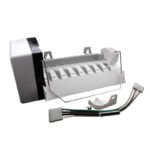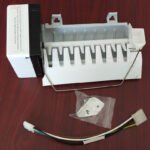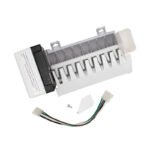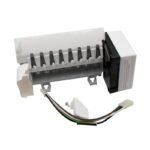
Built-in ice makers are standard configuration for modern French door and side-by-side household refrigerators. As an electromechanical composite component, it integrates water filling control, heating strip, temperature sensor, gear-driven ejection motor and plastic ice mold within one housing.
Unlike the refrigerator’s main refrigeration loop, the ice maker is a high-cycle wear part. It runs repeated heating, sensing and mechanical ejection cycles every day. Over time, plastic aging, motor gear wear, heating element burnout or sensor drift will trigger failure. For service businesses and spare parts distributors, ice maker failures create a recurring set of operational challenges.
Core Pain Points for Technicians & Distributors
1. Time-consuming component-level diagnostics
When the ice maker stops working, isolating the faulty single part requires multi-point electrical testing. In busy field service scenarios, this process consumes valuable billable time. Many service shops find it more economical to replace the whole assembly rather than hunt for individual failed sub-components.
2. High callback risk from partial repairs
Repairing only one failed small part (like the heater strip) does not address other aging components inside the unit. Remaining worn parts may fail shortly after service, resulting in repeat service calls, customer complaints and warranty losses.
3. Inventory complexity for distributors
Stocking dozens of individual sub-parts for different ice maker models increases SKU count, warehouse management cost and the risk of obsolete inventory. Pre-assembled, validated full ice maker units streamline inventory planning.
Overview of Part #2198697
Part #2198697 is a drop-in replacement ice maker assembly for compatible refrigerator models.
The assembly includes:
– Plastic ice mold tray
– Ice ejection motor and gear set
– Mold heating strip
– Temperature sensor
– Pre-terminated wiring harness & mounting hardware
This unit is factory pre-assembled and functionally tested. It is designed for direct replacement, without custom wiring or modification. Once installed, it follows the standard ice-making cycle: water fill → freeze → heat release → ice ejection → reset for next cycle.
Practical Notes for Service & Distribution
– Compatibility verification is critical. Always cross-reference the refrigerator model number before ordering.
– After installation, the freezer compartment needs to reach specified operating temperature for the ice maker to start its normal cycle. It is normal to wait several hours for the first batch of ice.
– Full assemblies are favored by mid-to-large appliance service companies, as they improve job turnaround rate and stabilize customer satisfaction.
For spare parts distributors, stocking verified complete ice maker assemblies helps meet the demand from professional service teams, while reducing the overhead of supporting fragmented small-component sales.